
Kenya’s industrial transformation agenda faces new challenges as the country misses out on the first round of US$443 billion (Sh57.1 billion) in funding for Special Economic Zones (SEZs).
And industrial parks jointly established by the African Export-Import Bank (Afreximbank) and the Africa Finance Corporation (AFC).
While other African countries, including Rwanda, Benin, Togo, Ethiopia, Malawi, Côte d’Ivoire, and the Democratic Republic of Congo.
Have already tapped into this financing to accelerate SEZ and industrial park development; Kenya’s uptake has been delayed.
A Missed Opportunity with Long-Term Potential
Last year, Afreximbank and its implementing partner ARISE IIP, a leading Pan-African developer of industrial infrastructure, unveiled an ambitious roadmap for Kenya’s industrial growth.
The plan included large-scale investments in SEZs and industrial parks across Mombasa (Dongo Kundu), Lamu, Busia, Eldoret, Isiolo, and Naivasharegions strategically selected for their potential to boost trade, logistics, and regional manufacturing.
The proposed funding package was designed to de-risk investors, with ARISE IIP committed to leasing land within gazetted SEZs.
Additionally, investing in enabling infrastructure such as roads, sewer systems, power lines, and industrial sheds.
Such investments could have significantly reduced barriers to entry for manufacturers and exporters eyeing Kenya’s emerging industrial corridors.
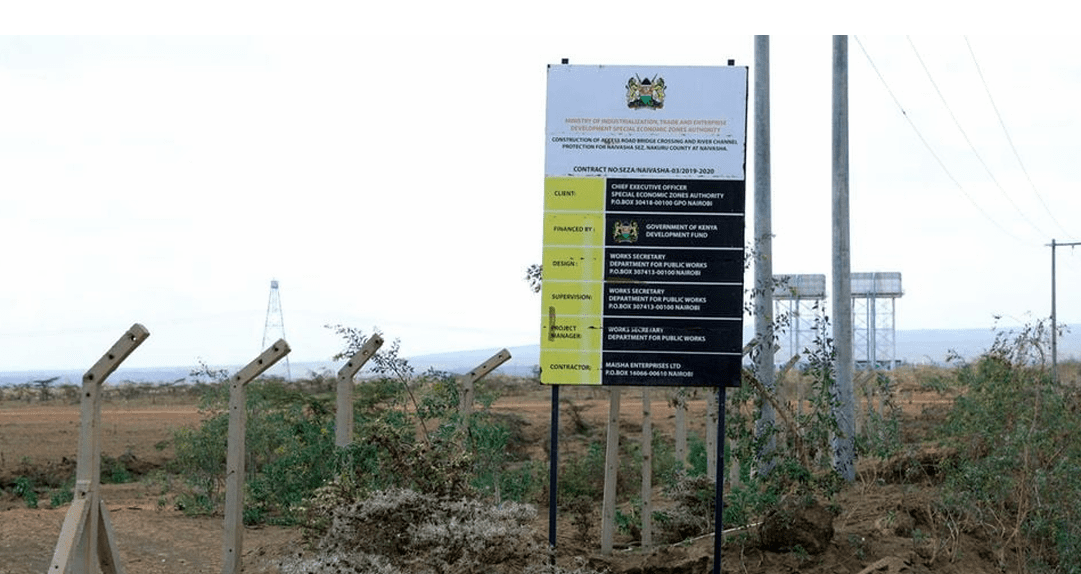
Naivasha Special Economic Zone is located next to Naivasha dry port
However, according to statements from the National Treasury, progress has been slower than anticipated.
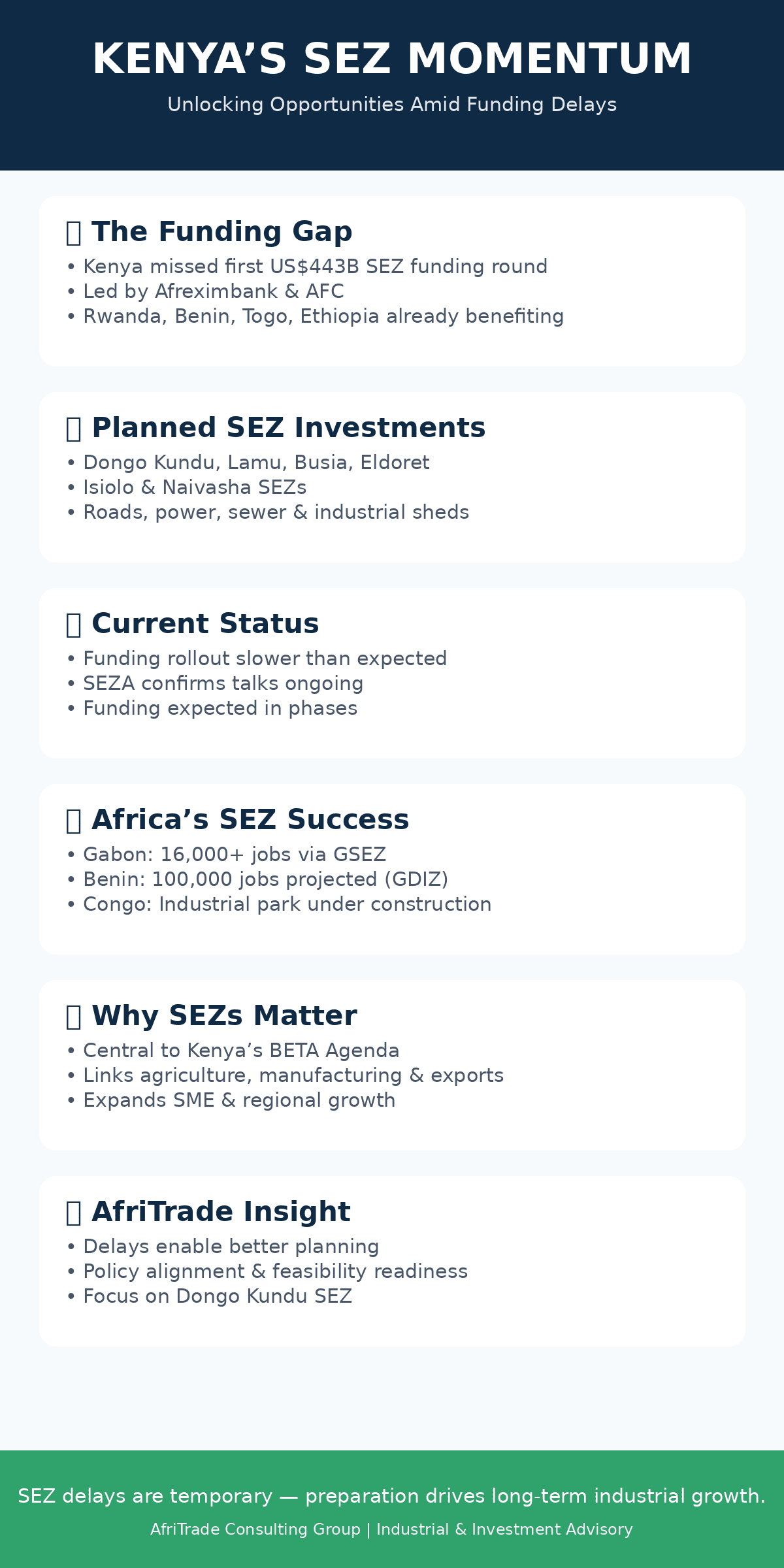
Despite this, the Special Economic Zones Authority (SEZA) has clarified that conversations with Afreximbank and ARISE IIP remain ongoing and that the funding will likely be released in phases.
Lessons from Africa’s SEZ Success Stories
Across the continent, countries that have embraced the Afreximbank-backed model of SEZ development are already reaping substantial economic rewards.
- Gabon has transformed its economy through the Gabon Special Economic Zone (GSEZ), turning from a raw log exporter into Africa’s leading veneer producer and creating over 16,000 jobs.
- Benin’s Glo-Djigbé Industrial Zone (GDIZ) is operational, positioning the country as a regional hub for processing cashew nuts, shea butter, and textiles, with over 100,000 jobs projected in the coming years.
- Congo signed an MoU with ARISE IIP in 2022, and construction at the Kin Malebo Industrial Park is already underway.
These examples highlight the transformative potential of SEZs when there is strong alignment between government policy, private-sector participation, and reliable infrastructure investment.
The Bigger Picture: SEZs and Kenya’s BETA Vision
In Kenya, SEZs and industrial parks remain critical to realizing President William Ruto’s Bottom-Up Economic Transformation Agenda (BETA).
The vision behind BETA is to spur inclusive growth by creating value chains that connect agriculture, manufacturing, and export trade, especially in rural and underserved areas.
Strategic SEZs such as Dongo Kundu, Naivasha, Busia, and Isiolo have the potential to act as economic catalysts by providing SMEs with access to industrial infrastructure.
Therefore, fostering job creation and promoting equitable regional development.
The Dongo Kundu SEZ, in particular, is envisioned as a flagship hub for manufacturing, logistics, and agro-processing.
When implemented, it is set to transform the Coastal region’s growth trajectory, linking infrastructure developments such as the Dongo Kundu Bypass and Mteza Bridge to high-value industrial opportunities.
AfriTrade’s Perspective: Turning Delays into Preparation
While funding delays may slow Kenya’s short-term industrial expansion, they also provide an opportunity for strategic planning and stronger investor alignment.
At AfriTrade Consulting Group, we believe this is the time for Kenya to consolidate its policy frameworks, refine feasibility studies, and strengthen partnerships that will attract sustainable, long-term investment into SEZs.
AfriTrade continues to play a key role in advancing investor facilitation and feasibility support for the development of SEZs, particularly in the Dongo Kundu region.
By combining deep market insight with practical expertise, AfriTrade helps bridge the gap between government ambition and private-sector readiness, ensuring Kenya remains on track to realize its industrialization goals.

