
For years, industrialisation has remained central to Kenya’s economic ambitions.
It has been viewed as the pathway to job creation, export growth, value addition, and long-term economic resilience.
But as global markets evolve at unprecedented speed, one pressing question is becoming increasingly difficult to ignore:
Is Kenya’s industrialisation strategy keeping pace with the realities of today’s economy?
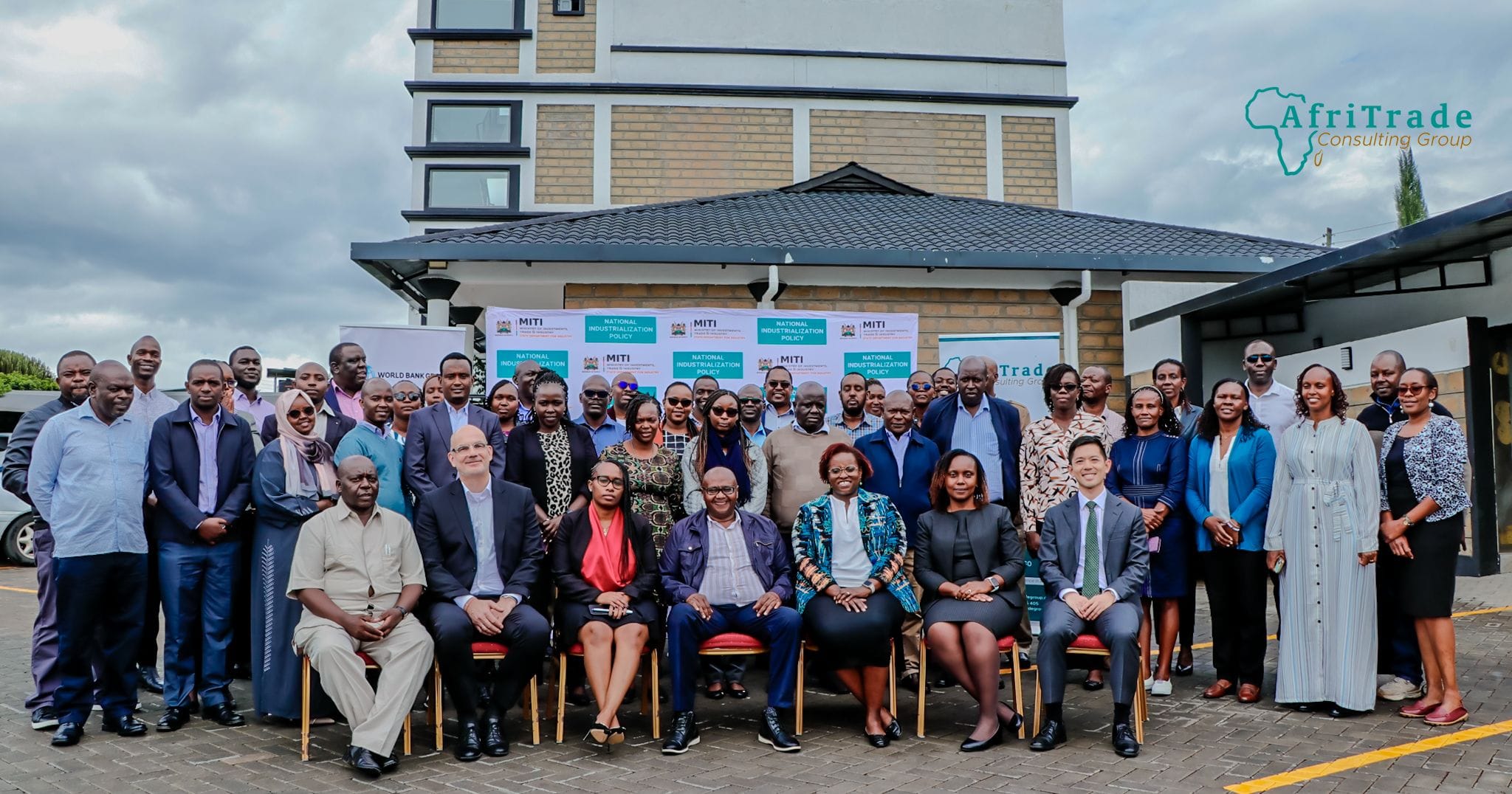
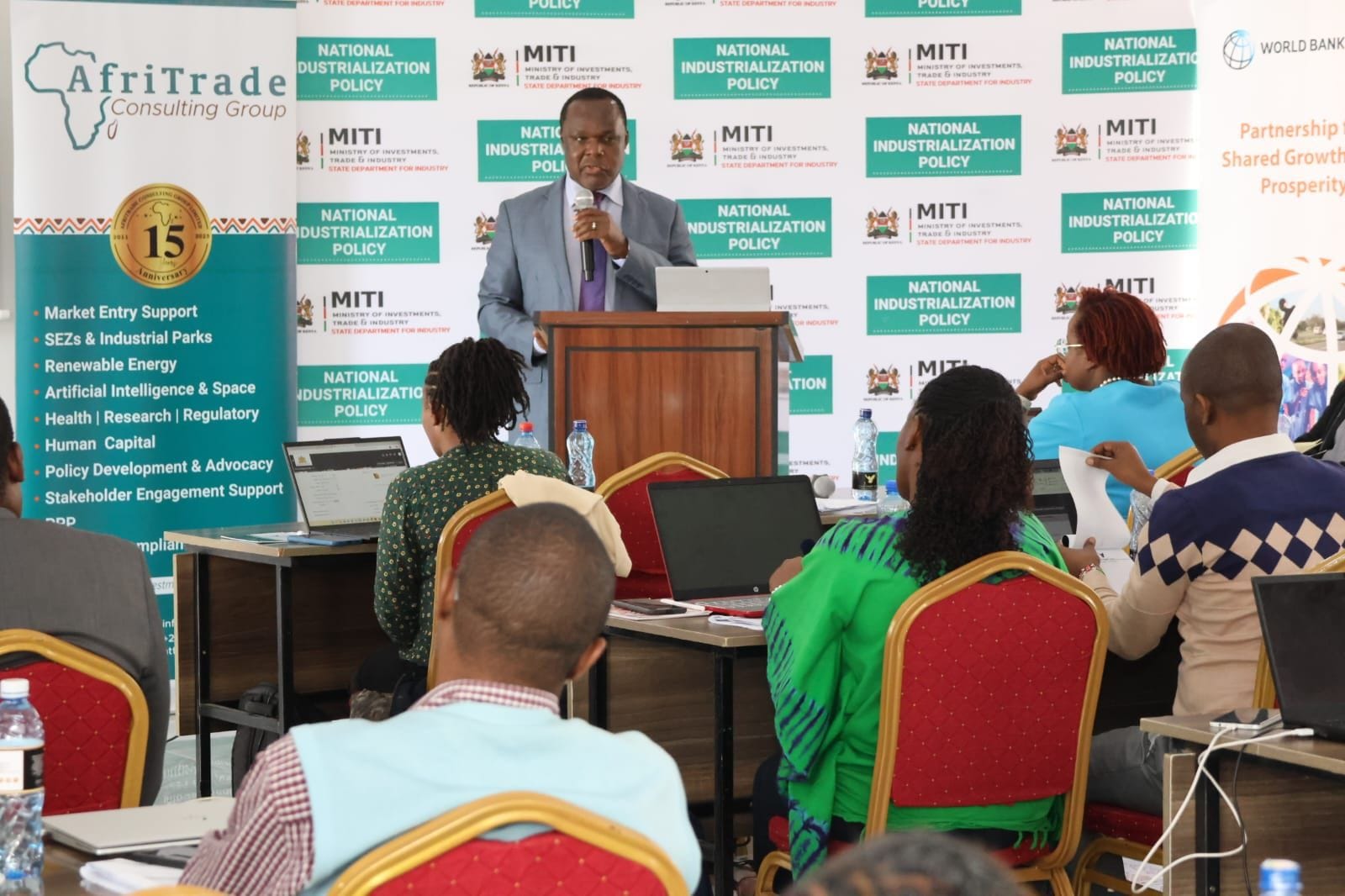
This question sat at the heart of recent stakeholder engagements convened as part of the review of Kenya’s National Industrialisation Policy (NIP 2012–2030), facilitated by AfriTrade Consulting Group in partnership with the State Department for Industry.
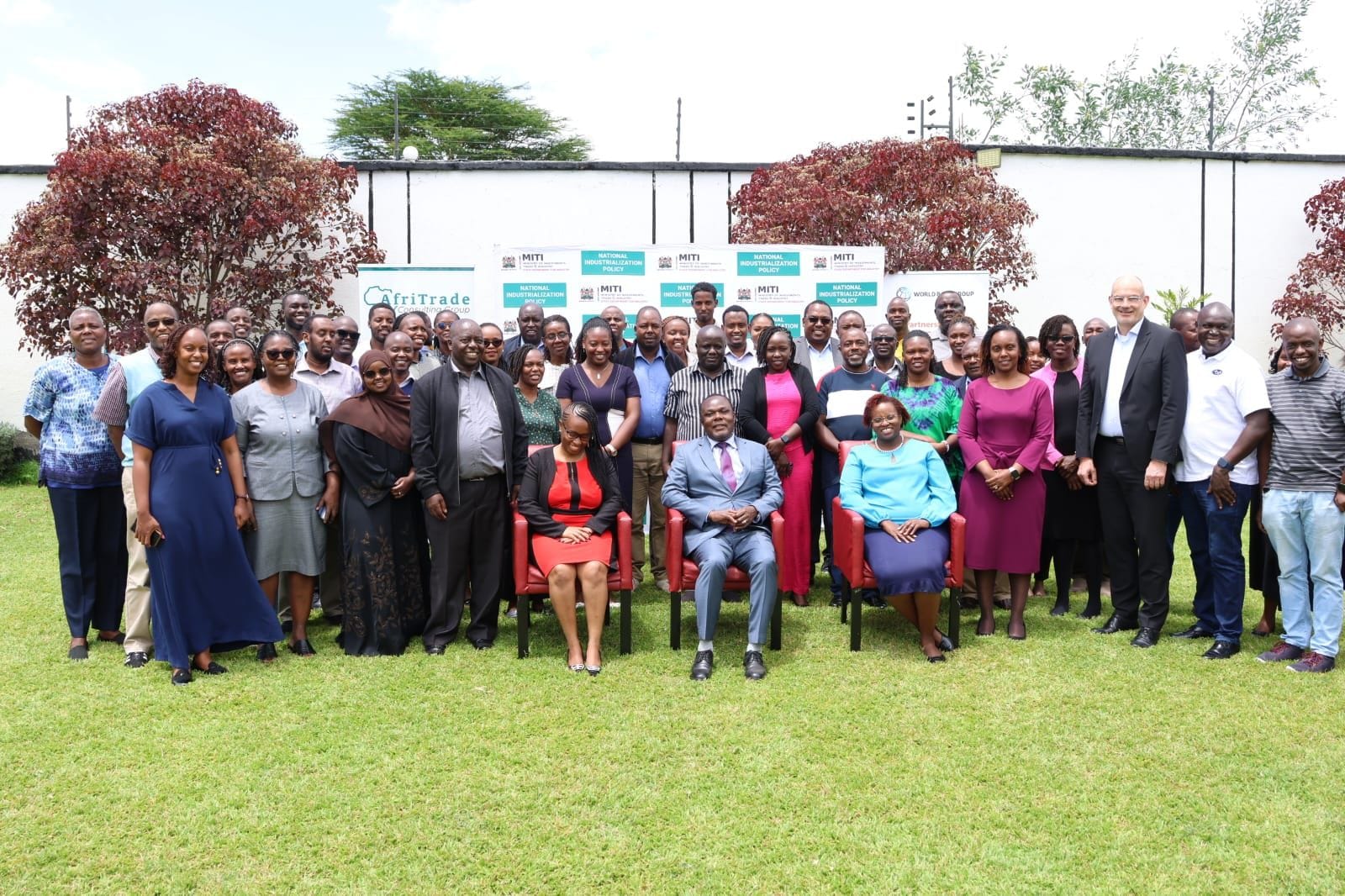
Bringing together policymakers, economists, development partners, and private sector leaders at Avian Court Hotel, the conversations reflected a growing recognition that industrialisation in the 21st century looks very different from what it did even a decade ago.
The Old Industrial Model Is Fading
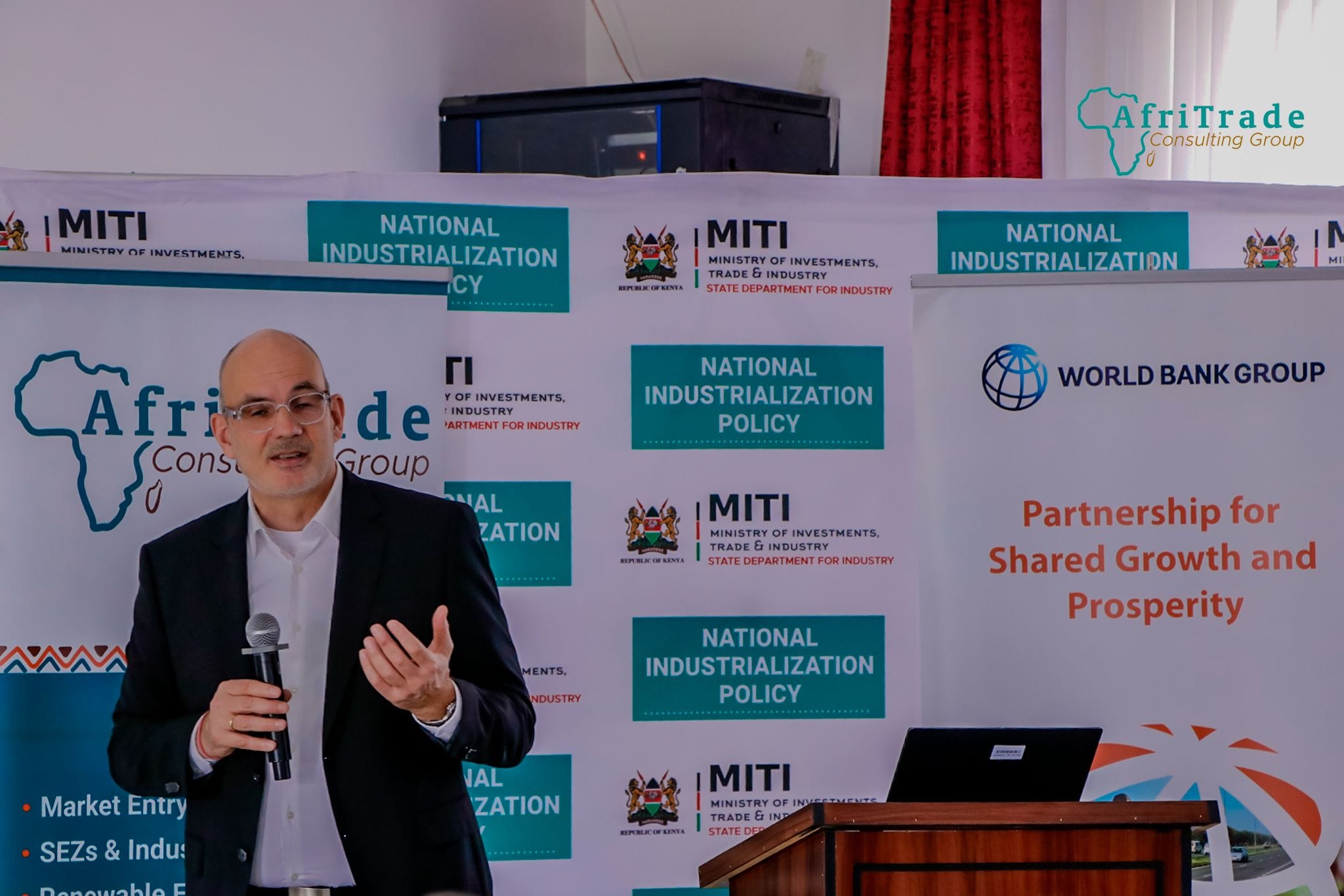
One of the strongest messages from the workshop came from Christian Ketels, who challenged conventional thinking around industrial growth.
“The old model of using low-cost labor to compete is becoming less effective,” he noted, emphasizing how technology, automation, and digital systems are reshaping global production.
For countries like Kenya, this represents both a challenge and an opportunity.
Industrialization is no longer just about building factories or expanding manufacturing output.
Today, competitiveness depends on how effectively economies integrate technology, services, innovation, logistics, skills development, and sustainability into a single ecosystem.
This shift is happening at a time when global trade standards are also tightening.
Sustainability, once viewed as a corporate add-on, is quickly becoming a requirement for participation in international markets.
As Ketels observed during the discussions, “Sustainability is no longer optional; it is increasingly becoming a trade requirement.”
That reality carries major implications for African economies seeking to strengthen exports and attract investment.
Kenya’s Numbers Tell a Difficult Story
The urgency behind the policy review became even clearer through the economic data presented during the workshop.
Kenya’s manufacturing sector, once expected to drive economic transformation, has steadily declined as a share of GDP from approximately 12 percent in 2007 to nearly 7.2 percent today.
At the same time, hundreds of thousands of young Kenyans continue entering the workforce annually, while formal job creation remains significantly below demand.
The result is an economy where informality continues to dominate.
And informality comes at a cost.
Lower productivity. Reduced investment. Weak standards compliance. Limited innovation. Lower competitiveness.
Stakeholders repeatedly returned to one core issue: Kenya cannot industrialize effectively while large sections of the economy remain disconnected from formal systems, financing structures, and industrial value chains.
Beyond Manufacturing: Building an Industrial Ecosystem
What emerged clearly from the discussions was that industrialisation cannot be approached in isolation.
Participants explored a wide range of themes including pharmaceuticals, leather processing, industrial infrastructure, standards and intellectual property, human capital development, and investment facilitation.
Yet across all sectors, the same conclusion surfaced repeatedly: fragmented systems are slowing industrial growth.
A successful industrial economy requires alignment.
Trade policy must support industrial policy. Education systems must respond to labour market needs.
Infrastructure must support production and logistics. Investment frameworks must incentivize value addition rather than raw exports.
Most importantly, industrialisation must be treated as a national competitiveness agenda rather than a standalone government programme.
A Defining Opportunity for Kenya
In his address to participants, Dr Juma Mukhwana called for Kenya to move decisively beyond primary production toward genuine economic transformation.
“Kenya must move beyond primary production toward a genuine transformation model,” he stated, pointing to the need for efficiency, interconnected industrial systems, and the political courage to make difficult but necessary decisions.
He also highlighted the advantages Kenya already possesses:
- Strategic access to regional and international markets
- Strong renewable energy potential
- Geographic positioning as a continental trade hub
- Expanding opportunities under the African Continental Free Trade Area
These advantages matter even more today as Africa undergoes a broader shift toward regional integration and intra-African trade.
Currently, trade within Africa remains significantly lower than in other regions globally.
Yet the AfCFTA presents an opportunity to reshape that reality by creating larger markets, strengthening regional value chains, and accelerating industrial production across the continent.
For Kenya, the stakes are particularly high.
Getting industrial policy right will determine not only the country’s manufacturing future, but also its competitiveness, employment outlook, and position within Africa’s emerging economic landscape.
The Road Ahead
Industrialization is no longer simply about economic growth figures or factory expansion.
It is increasingly about resilience, technological adaptation, sustainability, and the ability to compete in rapidly changing global markets.
The conversations held in Naivasha reflected an important shift in thinking: Kenya’s industrial future will depend not only on policy ambition, but on execution, coordination, and the willingness to rethink outdated development models.
At AfriTrade Consulting Group, we are proud to support this process through our expertise in trade policy, investment strategy, industrial development, and regional integration.
Because ultimately, the future of industrialisation in Kenya will not be shaped by policy documents alone.
It will be shaped by the decisions made today about how the country chooses to compete tomorrow.

