


Kenya has launched one of its most ambitious infrastructure financing initiatives yet: the National Infrastructure Fund (NIF).
At its core, the NIF represents a major shift in how the country plans to finance development moving away from heavy reliance on public debt toward an investment-led infrastructure model designed to crowd in private capital.
The scale of the proposal is substantial.
The government aims to mobilize approximately KSh 5 trillion over the next decade to support large-scale infrastructure development, including roads, dams, rail, and energy projects.
Financing is expected to come through asset listings, institutional investors, pension funds, sovereign wealth funds, and public-private partnerships (PPPs).
For investors, the opportunities could be significant.
If structured and managed effectively, the NIF has the potential to unlock new channels for infrastructure equity participation, deepen Kenya’s capital markets, and expand private sector involvement in strategic national projects.
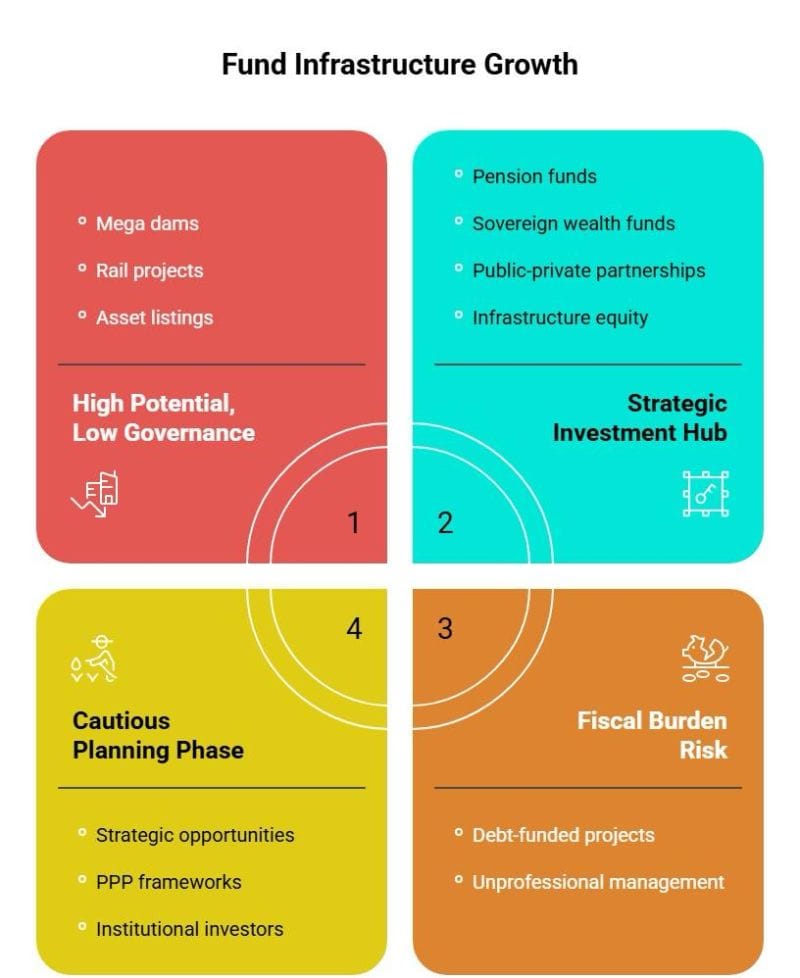
It could also position Kenya as a stronger regional hub for infrastructure investment within East Africa.
But while the opportunity is real, execution will determine whether the fund succeeds or struggles.
Large infrastructure funds require more than capital ambition.
Their success depends heavily on governance structures, transparent investment management, credible project pipelines, and disciplined allocation of resources.
Without strong oversight and commercially viable project selection, infrastructure financing vehicles can quickly become fiscal liabilities rather than engines of growth.
This is why strategic advisory and careful structuring will be critical as the NIF evolves.
Investors will be looking closely at:
- Governance and accountability frameworks
- Bankability of projects
- Risk allocation mechanisms
- Regulatory stability
- Long-term investment returns
- PPP implementation frameworks
For Kenya, getting this right could significantly reduce pressure on public finances while accelerating delivery of critical infrastructure needed for economic growth and regional competitiveness.
At AfriTrade Consulting Group, we work with investors, institutions, and stakeholders navigating infrastructure investment opportunities, PPP frameworks, and strategic advisory across Kenya and East Africa.
As infrastructure financing models across Africa continue to evolve, the ability to structure bankable, investment-ready projects will become increasingly important.
Because ultimately, infrastructure development is no longer only about building assets.
It is about building sustainable investment ecosystems capable of driving long-term economic transformation.

